
.jpg)
PROTECT YOUR DNA WITH QUANTUM TECHNOLOGY
Orgo-Life the new way to the future Advertising by Adpathway 
A backpacking sleeping pad is a must-have for backpackers who sleep on the ground in tents and under tarps to prevent heat loss to the ground. The best backpacking sleeping pads are air mattresses or foam pads because they’re lightweight and compact. While they vary in composition and thickness, they are all designed to complement your sleep insulation, keeping you warm, so your body can recover after a day of hiking.
When choosing a sleeping pad, it is important to also consider its weight, R-value, durability, size, thickness, comfort, and price. What are your priorities?
Here are our picks for the 10 best backpacking sleeping pads available today, based on these dimensions. Many of these sleeping pads are available in various lengths, widths, and weights, making it easy to find a model that fits your needs.
1. NEMO Tensor All-Season UL Insulated
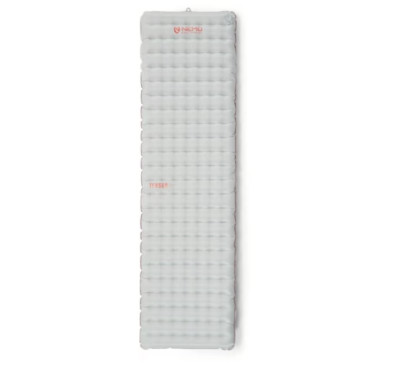
The NEMO Tensor All-Season Ultralight Insulated Air Pad strikes an excellent balance between low weight and comfort. Three and a half inches thick, it provides plenty of clearance for the bony hips of side sleepers but rolls up flat and is amazingly small when deflated. While it contains internal reflective layers like Therm-a-Rest’s NeoAir pads, it’s noticeably quieter and not crinkly-sounding. Weighing just 14.1 ounces in a mummy size regular (72″ x 20″), the Tensor All-Season has an R-value of 5.4, making it suitable for 3+ season use. An inflation sack is included. Review forthcoming.
2. Exped Ultra 6.5R Air Mattress

The Exped Ultra 6.5R Air Mattress is a lightweight inflatable sleeping pad that’s three inches thick and has an R-value of 6.9. It contains synthetic insulation, which makes it very quiet to sleep on, and is covered with a durable 20D non-slip fabric. The pad has a pair of flat stemless valves for inflation and deflation, and vertical baffles designed to keep you from rolling off the pad at night. The Ultra 6.5R is available in three mummy and three rectangular sizes, including a regular width, a wide width, and a long-and-wide pad. All six sizes are priced the same, so you can pick the size you want without having to sweat a higher price. Review coming soon.
3. Sea-to-Summit Ether Light XR Insulated ASC

The Sea To Summit Ether Light XR Insulated ASC Sleeping Pad has extra-thick 3.9″ air-sprung cells that provide excellent comfort for side and back sleepers. ThermoLite synthetic insulation and a platinum liner reflect warmth back to you to minimize radiant heat loss. A flat valve makes it quick to inflate and deflate, and a combination stuff sack/air pump is included for ease of use. The Ether Light has an R-Value of 4.1, making it suitable for three-season use, while a regular size (72″ x 20″) weighs 16.6 oz. Multiple sizes are available.
4. NEMO Eclipse All-Season

The NEMO Eclipse All-Season Sleeping Pad targets four-season use while keeping weight and packed size within quite reasonable limits. With an R-value of 6.2, this rectangular air mattress is 4″ thick with a contoured surface that is stable and supportive. It is insulated with two layers of quiet reflective film and has a single flat inflation/deflation valve for added durability. The Eclipse is available in multiple lengths and widths. The size weighs just 16 oz. Read the SectionHiker NEMO Eclipse All-season Review.
5. Therm-a-Rest NeoAir XLite NXT

The Therm-a-Rest NeoAir XLite NXT is a 3″ thick insulated air mattress that packs up small and flat, taking up little room in a backpack while providing plenty of comfort for side sleepers and back sleepers. With an R-value of 4.5, it is also one of the warmest 3-season pads available. The XLite NXT is available in various widths and lengths, with the 72″ x 20″ regular size weighing in at just 13 oz. The XLite NXT also comes with an inflation sack that can be used as a stuff sack. Read the SectionHiker review.
6. Therm-a-Rest NeoAir XTherm NXT

The NeoAir XTherm NXT is nearly identical to the NeoAir XLite NXT but has more insulation and a tougher cover fabric for greater dependability in cold weather and winter. It also packs up small and flat, taking up little room in a backpack despite having more insulation. The R-Value of 7.3 will keep you warm down to 40 below zero F, while the inflatable 3-inch-thick pad provides plenty of cushion for side sleepers or back sleepers alike. The NeoAir XTherm NXT is available in a variety of widths and lengths, with the 72″ x 20″ regular mummy size weighing in at just 15.5 oz. Read the SectionHiker XTherm NXT review.
7. Big Agnes Rapide SL Insulated
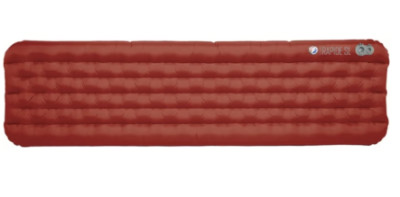
The Big Agnes Rapide SL Insulated Air Pad is an insulated sleeping pad that is lightweight enough to be used for 3+ season use. With an R-value of 4.8, the Rapide SL is an incredible 4.25 inches thick and insulated with 2 layers of reflective film, much like Therm-a-Rest’s NeoAir pads but far quieter. A low-profile flat valve enables rapid inflation, deflation, and micro-adjustments so you can fine-tune firmness. Weighing just 18 oz, the Rapide SL Insulated Air Pad includes an inflation sack for rapid deployment. Read the SectionHiker Rapide SL Insulated Review.
8. Sea-to-Summit Ether Light XR Pro Insulated ASC

The Sea-to-Summit Ether Light XR PRO Insulated ASC Sleeping Pad is an insulated inflatable sleeping pad that is 4″ thick and has an R-value of 7.4, making it suitable for cold-weather backpacking and camping use. Weighing 25.6 oz, the sleeping surface of the Ether Light XT Extreme is made up of air-sprung cells, which mimic a pocket spring mattress so that the surface of the pad conforms to your body shape regardless of whether you sleep on your back, side, or stomach. The Extreme is insulated with a reflective platinum coating and 2 layers of Thermolite synthetic insulation positioned inside the top and bottom sides of the pad. The pad’s 30/40d nylon covering offers a warm hand as well as added puncture and abrasion resistance. A pump sack is included.
9. NEMO Tensor Elite Air Pad

The NEMO Tensor Elite Sleeping Pad is an 8.5 oz ultralight mummy sleeping bag (72″ x 20″ x 3″) that is incredibly comfortable but rolls up smaller than a Nalgene bottle. It has an R-value of 2.4 making it suitable for warm weather use, with 3″ of cushioning to protect you from roots and rocks underneath. It’s made with a rugged 10D Cordura nylon to protect it from punctures and comes with a large inflation sack. NEMO’s flat valves are durable and much easier to inflate/deflate than stick valves. An even lighter-weight short version (63 x 20 x 3) weighs 7.6 oz. Read the SectionHiker NEMO Tensor Elite Review.
10. Therm-a-Rest Z Lite Sol Foam Pad

The Therm-a-Rest Z Lite Sol is an ultralight, inexpensive, and virtually indestructible foam sleeping pad, making it a favorite among ultralight backpacking fanatics and parents alike. Made with closed-cell foam, it folds up into accordion-like sections, making it easy to carry and attach to the outside of a backpack. One side has an aluminized reflective coating that radiates your body heat back at you. With an R-value of 2.0, the Z Lite Sol is a good warm-weather sleeping pad. A size regular (72″ x 20″) weighs 14 oz, but it’s also available in multiple sizes. You can also trim a foam Z Lite Sol with scissors to shave off gear weight. Read the SectionHiker ZLite Sol Review.
Backpacking Sleeping Pad Guide
Choosing a sleeping pad requires prioritizing between multiple factors, some of which can be at odds with one another.
Sleeping Pad R-Values and Air Temperature in Degrees
What’s the correlation between air temperature and sleeping pad R-values? When do you need a pad with a higher R-value? This table is based on Exped’s recommendations in Fahrenheit and Celsius degrees.
| Air Temperature (F): | 50 | 30 | 25 | 10 | 0 | -15 | -25 | -40 |
| Minimum R-Value | 1 | 2 | 3 | 4 | 5 | 6 | 7 | 8 |
| Air Temperature (C): | 10 | -1 | -4 | -12 | -18 | -26 | -32 | -40 |
| Minimum R-Value | 1 | 2 | 3 | 4 | 5 | 6 | 7 | 8 |
In addition:
- R-values are additive, so you can combine two pads to increase your warmth level.
- Women need higher R-values pads because they have lower body mass than men. An additional R-value of 1 is usually a good hedge for women and other cold sleepers
Sleeping Pad Thickness
Thicker sleeping pads are often more comfortable for side sleepers because they provide more cushioning under the hip bones. Depending on their length and width, it may take more breaths to inflate a very thick air pad, something to factor into your decision.
Sleeping Pad Dimensions
Most popular sleeping pads are available in a wide range of lengths and widths. While large pads are often more comfortable, they’re often heavier. Most pads are available in a standard 72″ x 20″ size. But many pads are also available in longer, shorter, and wider sizes, or mummy and rectangular shapes.
Sleeping Pad Weight
A sleeping pad is one of the most important items on your gear list for comfort and insulation. While the weight of all backpacking gear matters, don’t make the mistake of choosing a pad that compromises your sleep just to reduce the weight of your gear list. For example, most sleeping bag and quilt temperature ratings assume that you’re sleeping on a pad with an R-value between 4.0 and 5.0. If you sleep with a pad that has a lower R-value, even in summer, you probably won’t experience the full temperature rating of your sleep insulation. That’s a sobering thought.
Sleeping Pad Compactness
The size and compactness of a sleeping pad can be important factors depending on your packing style and the size of your backpack. Inflatable pads usually pack up the smallest, self-inflating pads are usually larger, and foam pads are the largest. Depending on how you pack, foam sleeping pads may need to be attached to the outside of your backpack because they’re so large. While closed-cell foam pads don’t absorb water, if they get wet, you’ll want to dry them off before putting a sleeping bag or quilt on top of them after a wet day on the trail.
Sleeping Pad Types
There are three types of sleeping pads: air mattresses, self-inflating mattresses, and closed-cell foam pads. Air mattresses provide the greatest comfort and pack up the smallest when deflated. Most come with a lightweight stuff sack for inflating them. Self-inflating mattresses are usually the heaviest and will partially inflate with air when unrolled for use. You still have to blow them up a bit, but only slightly. Closed-cell foam pads are the least expensive but they are bulky have to be attached to the exterior of your pack. They are very reliable, however, because they’re made with foam, so they can’t be punctured, and they’re waterproof, so they won’t get heavier if it rains.
Sleeping Pad R-Values
The most reliable measure of insulation is R-value. Beginning in 2020, a new Sleeping Bag R-Value Standard was adopted by the outdoor industry, and most of the major sleeping pad manufacturers, including Therm-a-Rest, NEMO, Sea-to-Summit, REI, Big Agnes, and Klymit, have retested and re-rated their sleeping pads using it. Klymit, notably, has not. This new standard benefits consumers by making it possible, for the first time, to compare sleeping pads by their R-values, since they all use the same testing methodology.
For three-season backpacking and camping, an R-value of 2, or higher, is recommended. For winter backpacking and camping, an R-value of 5.7, or higher, is recommended. R-values are additive, so you can stack two pads to increase your warmth level. Women need higher R-value pads because they have lower body mass than men. An additional R-value of 1 is usually a good hedge for women and other cold sleepers
Sleeping Pad Durability
Foam sleeping pads are the most durable, self-inflating pads are the next most durable, and inflatable air mattresses the least. Inflatable air mattresses tend to fail in two places: the valves and at the seams of fabric. Flat valves that are flush with the surface of the sleeping pad are more durable than stick valves because they have no moving parts and can’t catch on obstructions.
Frequently Asked Questions: Sleeping Pads
1. What is a sleeping pad for backpacking?
A lightweight cushion placed under your sleeping bag to provide insulation and comfort on rough ground.
2. Why do I need a sleeping pad for backpacking?
It insulates you from cold ground and adds cushioning for better sleep and rest.
3. How do I choose the best sleeping pad for backpacking?
Consider weight, thickness, insulation (R-value), durability, and pack size.
4. What types of sleeping pads are there?
Foam, inflatable (air), and self-inflating pads.
5. What is the difference between inflatable and foam sleeping pads?
Inflatable pads are lighter and more compact; foam pads are durable and always ready to use.
6. Are inflatable sleeping pads durable enough for backpacking?
Yes, but they require careful handling to avoid punctures.
7. How much does a typical backpacking sleeping pad weigh?
Between 8 ounces to 2 pounds, depending on type and insulation.
8. What is the best sleeping pad for ultralight backpacking?
Thin inflatable pads with high R-value, weighing under 1 pound.
9. How thick should a backpacking sleeping pad be?
Usually between 1.5 to 3 inches thick for comfort and insulation.
10. What is R-value and why is it important?
R-value measures insulation; higher values mean better heat retention from the ground.
11. How do I know what R-value I need?
Choose R-value based on expected temperature; around 3 for summer, 4+ for colder conditions.
12. Can I use a camping sleeping pad for backpacking?
You can, but camping pads are often heavier and bulkier than backpacking pads.
13. How do I inflate my backpacking sleeping pad?
By mouth, pump sacks, or built-in pumps depending on the model.
14. What do I do if my inflatable sleeping pad leaks air?
Patch small holes with repair kits; carry patches on trips for emergencies.
15. Are self-inflating pads better than air pads?
Self-inflating pads combine foam insulation with air but tend to be heavier.
16. How long does it take to inflate a backpacking sleeping pad?
Usually less than a minute by mouth or using a pump sack.
17. Can a sleeping pad keep me warm in cold weather?
Yes, especially insulated pads with a good R-value.
18. How do I clean and maintain my sleeping pad?
Wipe with mild soap and water, avoid harsh chemicals, and store dry.
19. Can I repair a punctured sleeping pad myself?
Yes, most come with patch kits for small repairs.
20. What is the average size of a backpacking sleeping pad?
About 20-25 inches wide and 72 inches long (standard adult size).
21. Should I get a full-length or torso-length sleeping pad?
Full-length offers more comfort; torso-length saves weight and space but offers less coverage.
22. Can I use a sleeping pad on top of another pad for extra comfort?
Yes, layering pads can increase insulation and cushioning.
23. Do sleeping pads provide enough cushioning for side sleepers?
Thicker pads (2+ inches) generally offer better side-sleeper comfort.
24. What materials are used in backpacking sleeping pads?
Nylon or polyester shells with foam or TPU-coated air bladders inside.
25. Are there eco-friendly sleeping pads?
Some brands offer pads made from recycled or sustainable materials.
26. How much should I expect to spend on a good quality backpacking sleeping pad?
Between $50 and $200 depending on features and brand.
27. What brands make the best backpacking sleeping pads?
Popular brands include Therm-a-Rest, Sea to Summit, Nemo, Big Agnes, and Klymit.
28. Can children use adult backpacking sleeping pads?
Yes, but smaller or kid-specific pads may be more comfortable.
29. Do sleeping pads pack down small enough for my backpack?
Most inflatable pads pack very small; foam pads are bulkier.
30. How do I store my sleeping pad when not in use?
Keep it dry and loosely rolled or unrolled to preserve foam and valve integrity.
31. Are there hybrid sleeping pads combining foam and air?
Yes, self-inflating pads combine foam insulation with air chambers.
32. What is the lifespan of a typical backpacking sleeping pad?
3-10 years depending on use, care, and material quality.
33. Should I buy a sleeping pad with built-in pillow support?
Built-in pillows add weight; some prefer separate pillows for adjustability.
34. How do temperature and altitude affect sleeping pad performance?
Colder temps and higher altitudes require higher R-values for warmth.
35. Can I use a sleeping pad on rocky or uneven ground?
Yes, but durability varies—foam pads handle rough terrain better.
36. Is it better to rent or buy a backpacking sleeping pad?
Buying is usually better for regular use; renting may suit occasional trips.
37. How do I prevent slipping on my sleeping pad during the night?
Use pads with non-slip surfaces or place a non-slip mat underneath.
38. What is the best way to carry a sleeping pad while hiking?
If it’s foam attach it outside your pack; if it’s an inflatable pad, roll it inside if space allows.
39. Are there sleeping pads designed specifically for winter backpacking?
Yes, winter pads have higher R-values and thicker insulation. Look for pads with an R-value of 5 or higher.
40. How do different insulation types impact warmth and weight?
Synthetic insulation adds warmth but increases weight compared to uninsulated pads.
41. What accessories can improve my sleeping pad experience?
Pump sacks, repair kits, carrying bags, inflatable pillows.
42. Can I use a sleeping bag without a sleeping pad?
You can, but you’ll lose insulation and comfort from the cold ground.
43. What are common mistakes to avoid when choosing a sleeping pad?
Ignoring weight, insulation needs, or pack size; not testing comfort beforehand.
44. How can I test a sleeping pad before buying it?
Try lying on it in-store or read detailed user reviews online. Many stores also allow you to purchase a pad, try it indoors, and return it.
45. Are there gender-specific or size-specific sleeping pads?
Some brands offer women’s versions with tailored width and shape.
46. Can I use a hammock with a backpacking sleeping pad?
Underquilts or insulated hammocks are better; regular pads are primarily intended for ground use.
47. How does the shape of the pad affect comfort and weight?
Mummy-shaped pads save weight but offer less space; rectangular pads provide more room but weigh more.
48. Should I consider waterproof covers for my sleeping pad?
Waterproof covers protect from moisture but add weight; some pads have water-resistant shells.
49. Are there multi-use or convertible sleeping pads for backpacking?
Some double as seat cushions or camp mats with convertible designs.
50. How important is noise level from the sleeping pad material?
Quiet materials improve sleep quality; cheaper pads may crinkle noisily during movement.
SectionHiker never accepts payment for gear reviews or editorial coverage. When you buy through affiliate links on our site, we may earn a small commission at no extra cost to you. Help us continue to test and write unsponsored and independent gear reviews, hiking and backpacking FAQs, and free hiking guides.








 English (US) ·