
.jpg)
PROTECT YOUR DNA WITH QUANTUM TECHNOLOGY
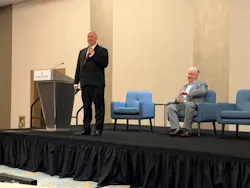
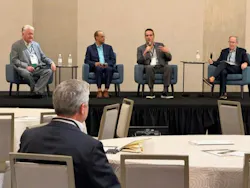
Orgo-Life the new way to the future Advertising by AdpathwayNavigating the shift from volume to value in healthcare The Healthcare Innovation Summit in Houston brought together healthcare leaders for insightful conversations on the challenges and opportunities shaping the industry. Healthcare organizations are being asked to do a great deal at once. They must find meaningful ways to use artificial intelligence, improve clinical workflows, rethink where and how care is delivered, and protect increasingly connected systems from disruption. But adopting technology is only part of the job. Health system leaders also have to determine which problems are worth solving, involve the right people in those decisions and prepare their organizations for the risks and changes that come with innovation. Those questions ran through the conversations at the Healthcare Innovation Summit in Houston on Oct. 15. Speakers shared examples of new approaches to clinical care, virtual services, population health and AI, along with some candid observations about what it takes to put new ideas into practice. The message was consistent: technology can create opportunities, but its value depends on how thoughtfully it is introduced and how well it serves the people using it. Pavitra Krishnamani, M.D., of MD Anderson Cancer Center In her opening keynote, Pavitra Krishnamani, M.D., of MD Anderson Cancer Center, challenged attendees to think beyond what technology can do and consider what healthcare organizations actually need it to do. Her work includes bringing people from different disciplines together to explore AI and digital health, including through a cross-functional hackathon and an AI and digital health journal club. That kind of collaboration matters as organizations consider how to use AI in clinical settings. Questions about training data, inaccurate recommendations and what happens when an AI system disagrees with a clinician are not simply technical questions. They require input from the people responsible for patient care and a clear understanding of who remains accountable for decisions. Krishnamani encouraged leaders to ask a more fundamental question: “Rarely do we ask what should be.” It is an important distinction. The fact that a technology is available does not necessarily mean a health system needs it, or that it belongs in every workflow. Starting with a defined problem gives organizations a better way to evaluate potential solutions and determine whether the investment is making a meaningful difference. From left: Courtenay Bruce, J.D., M.A., chief experience officer and professor of care experience; Ginny Torno, senior director of Innovation and IT Clinical Systems; and Jordan Dale, M.D., vice president, CMIO and chief health AI officer; speakers on the Houston Methodis panel, shared examples of how the organization is working to reduce the administrative burden on clinicians and improve the care experience. At Houston Methodist, Ginny Torno, senior director of Innovation and IT Clinical Systems; Jordan Dale, M.D., vice president, CMIO and chief health AI officer; and Courtenay Bruce, J.D., M.A., chief experience officer and professor of care experience, shared examples of how the organization is working to reduce the administrative burden on clinicians and improve the care experience. One initiative involves ambient listening technology to support nursing documentation, with the goal of giving nurses more time to focus on patients. Other projects have reinforced the importance of listening to frontline staff. A medication-timing initiative intended to reduce nighttime interruptions, for example, created additional work for nurses. Rather than assuming the original approach was the right one, the organization adjusted it in response to feedback. The experience illustrates a challenge that can get lost in discussions about new technology: even a well-intentioned improvement can create unintended consequences when it meets the realities of a busy clinical environment. Adoption requires more than making a tool available. Leaders need to understand how it affects existing responsibilities, where it adds friction and what changes would make it genuinely useful. Torno, Dale and Bruce’s discussion underscored the importance of involving the people who will use a technology in shaping how it is implemented. The goal is not simply to introduce a new tool, but to make sure it works in practice and delivers the intended benefits. That means treating implementation as an ongoing process, not a one-time decision. Frontline feedback needs to be part of the process from the beginning, helping health systems refine their approach as they learn what works. Leaders at Houston Methodist and Memorial Hermann are putting these ideas into practice, from virtual hospitalists and virtual nursing to new approaches to care coordination and population health. The discussion will explore what it takes to move beyond individual technology projects and truly redesign care around the needs of patients, clinicians and communities. From left: Mital Brahmbhatt, MHA, LMSW, System Director, Care Coordination & Population Health - Memorial Hermann Health System; Ginny Torno, Senior Director, Innovation & IT Clinical Systems - Houston Methodist; and Adam Cherrington, (Moderator), Founder & Patient Champion - Aligned Health Advisory. The Summit’s discussion of virtual care and population health showed how technology can support a broader shift in healthcare delivery, moving beyond individual encounters toward more coordinated, ongoing relationships with patients. Houston Methodist has expanded virtual services from its early work in intensive care to applications that include virtual nursing, telestroke, telepsychiatry and virtual urgent care. Virtual nurses can help with admissions and discharges, support documentation and give bedside nurses more time for direct patient care. The organization is also exploring additional ways to deliver care virtually, including virtual hospitalists. These programs are not simply about replacing an in-person interaction with a video call. They can change how work is distributed across a health system and how staff members support one another. The challenge is to design the model around the needs of patients and clinicians rather than treating virtual care as a technology project in isolation. Memorial Hermann’s approach to care coordination, described by Mital Brahmbhatt, MHA, LMSW, system director of Care Coordination and Population Health, brings together nurses, social workers, community health workers, pharmacists, health coaches and other staff to help patients navigate the period after a hospital stay and address issues that can interfere with recovery. Those issues may have little to do with the medical treatment itself. Patients can have insurance and still struggle to afford prescriptions, find transportation, arrange child care or access food. Without support for these needs, a discharge plan may look sound on paper but prove difficult to follow at home. Technology can help teams identify patients who may need additional attention and share care plans across the organization. But the human relationships remain central. Social workers and community health workers bring context, judgment and communication skills that cannot be reduced to a referral or risk score. Both organizations are exploring ways to connect more of the care experience, including home-based services and tools that help clinicians anticipate problems earlier. The larger goal is to make care more responsive to patients’ circumstances, not simply more convenient to deliver. Artificial intelligence is rapidly evolving from decision support tools to intelligent systems capable of orchestrating workflows, automating complex tasks, and augmenting clinical and operational decision-making. As agentic AI moves from concept to reality, healthcare leaders must determine where these technologies can create meaningful value — and where human oversight remains essential. From left: Chad Wilson, CEO & Former CISO - Wild Duck Labs AI Research Lab/Stanford Health/Children's National and Medstar; Jordan Dale, MD, VP, CMIO / Chief Health AI Officer - Houston Methodist; Adam Cherrington, (Moderator), Founder & Patient Champion - Aligned Health Advisory; and Elise Ghebremichael, Founder & Healthcare Change Strategist - Leader in Change Consulting. During Beyond the AI Pilot: Preparing Health Systems for the Era of Agentic Intelligence session, Jordan Dale, M.D., vice president, CMIO and chief health AI officer at Houston Methodist, joined Chad Wilson, CEO and former CISO at Wild Duck Labs AI Research Lab, Elise Ghebremichael, founder and healthcare change strategist at Leader in Change Consulting, and moderator Adam Cherrington, founder and patient champion at Aligned Health Advisory, to explore how health systems can move beyond AI experimentation toward practical, responsible adoption. Unlike generative AI tools that primarily produce content in response to a prompt, agentic systems can pursue a defined goal, break it into tasks and take actions with varying degrees of human oversight. That creates new possibilities, but it also raises the stakes when a system misunderstands its instructions or takes an action its users did not intend. Dale described Houston Methodist’s use of a voice agent called Zoe in its call center. The system handles routine tasks such as rescheduling appointments autonomously, with monitoring in place. For more consequential interactions, such as helping a new patient navigate the organization, the process can involve a human agent who verifies the information before it moves forward. The example illustrates a practical way to approach autonomous systems: match the degree of autonomy to the level of risk. A routine appointment change is different from an interaction in which an error could damage a new patient’s trust or disrupt care. Dale also described how these technologies can change the structure of a team. As the voice agent takes on more routine work, staff can move into roles focused on monitoring performance, reviewing interactions and handling more complex needs. The opportunity, in other words, is not just to automate tasks but to rethink how people and technology work together. Other examples discussed at the Summit included AI-powered knowledge tools that help employees find answers without searching through lengthy policy documents, as well as systems that can bring information together from multiple platforms to support clinical review. An audience member who works in flight medicine at NASA described using an agent to retrieve and reason across complex flight rules and contingency procedures, while emphasizing the need to validate its output. The panelists cautioned against giving AI broad authority before an organization has defined what it should accomplish. Their advice was to start with a narrow use case, specify the desired outcome and success measures, and establish what decisions the system is allowed to make. Organizations also need to consider access permissions, user segmentation, reliable backups and the ability to intervene when something goes wrong. Not every workflow needs an AI agent, and not every decision should be delegated to one. As the technology becomes more capable, health systems will need to be increasingly deliberate about where automation makes sense and where human judgment should remain central. Dr. Attila J. Hertelendy, Assistant Professor, Information Systems and Business Analytics - Florida International University (left) and Richard Staynings, Professor - University of Denver, Healthcare Cybersecurity Luminary, discussed what to do when the lights go out. The agentic AI discussion connected directly with a broader conversation about patient safety, cybersecurity and the risks created by expanding digital ecosystems. As organizations introduce AI, they are adding more than a new application. They may also be introducing new data flows, connections to other systems, third-party services and ways for sensitive information to be accessed or handled. Security and privacy reviews need to account for those details, not just the name of the tool being deployed. Cybersecurity expert Richard Staynings offered a useful principle for health systems to keep in mind: “You should consider every AI workflow a PHI workflow until you prove that it isn't.” That means understanding what information an AI system can access, how that information is used and retained, which vendors are involved, and what happens if the system is compromised or behaves unexpectedly. Organizations also need incident response plans that account for AI-specific risks rather than assuming existing procedures will cover every scenario. Governance cannot be left to IT and security teams alone. Clinicians, operational leaders, privacy and legal specialists, human resources and executive decision-makers all have a role in determining how AI should be used and what safeguards are appropriate. Staff members also need enough AI literacy to recognize errors, understand the limits of a tool and know how to escalate a concern. These responsibilities become especially important as vendors introduce AI capabilities into products health systems already use. Organizations may find themselves managing new features and risks even when they did not initiate a separate AI project. The same principle applies to agentic systems with the ability to take actions. Clear instructions, limited permissions, defined boundaries and human oversight are essential. A system should not be given broad access simply because it is capable of completing a task. Cybersecurity is no longer a conversation that happens on the sidelines of healthcare technology. As health systems expand their digital and AI footprints, security leaders are increasingly at the table, helping shape technology strategy, guide innovation and prepare organizations for a rapidly evolving threat landscape. Summit panelists included, from left: Richard Staynings, Professor - University of Denver, Healthcare Cybersecurity Luminary; Chad Wilson, CEO & Former CISO - Wild Duck Labs AI Research Lab/Stanford Health/Children's National and Medstar; Fernando De La Peña Llaca, President & CEO - Aexa Aerospace; and David Finn, Principal Owner - Cyber Health Integrity, LLC. The need for resilience was underscored by Staynings’ account of an electronic health record implementation more than two decades ago. When leaders considered what would happen if the system went down, they initially believed clinicians could fall back on paper. But clinicians reported that patient care was affected after just seven minutes without the EHR. That experience helped make the case for a significant investment in failover capabilities. The story is a reminder that digital infrastructure is now closely tied to clinical operations. Downtime is not simply an IT inconvenience. It can affect access to patient information, clinical decisions, communication and the ability to deliver care safely. As AI becomes more embedded in healthcare workflows, organizations need to think just as carefully about how they will operate when a system is unavailable, produces unreliable results or must be taken offline. Backups, recovery procedures and contingency plans are part of responsible implementation, not separate concerns to address later. Of course, even a well-designed solution needs to demonstrate that it is worth the investment. Robbie Bullough, senior vice president of insights at KLAS Research, encouraged health system leaders to look carefully at the results they are getting from technology and to consider how new tools fit into their broader digital environments. The return may not always be immediate. In the discussion of care coordination, Memorial Hermann’s Mital Brahmbhatt noted that the value of social work and community health support can take six months to a year to become evident. Preventing a readmission or helping a patient manage a complicated transition may produce benefits over time rather than in a single encounter. That makes it important to define success before implementation, establish meaningful measures and give teams a way to evaluate whether a new approach is working. The right measures will depend on the problem being addressed, whether that means reducing administrative work, improving the patient experience, supporting clinical decisions or avoiding unnecessary utilization. Leaders also need to account for the less visible work involved in implementation, including training, workflow redesign, governance and ongoing monitoring. A tool that performs well in a demonstration may require considerable adjustment before it delivers value in a real healthcare environment. Across the Summit’s discussions, one idea continued to surface: healthcare innovation is ultimately about people. AI and other digital tools may help clinicians find information, coordinate care, reduce administrative work and anticipate problems. But those benefits depend on thoughtful choices about where technology belongs, how it is introduced and how people are supported through the change. Krishnamani brought that idea back to healthcare’s fundamental purpose. “The core business of healthcare isn't data, and it isn't efficiency,” she said. “It's the moment between a person who needs help and a compassionate person trained to give it.” That is a useful standard for evaluating the next wave of innovation. The question is not simply whether a health system can adopt a new technology, or whether a vendor can demonstrate what it can do. It is whether the technology helps people deliver better care, whether the risks are understood and managed, and whether the organization is willing to listen and adjust when the results fall short of expectations. Meaningful innovation takes more than a promising tool. It requires collaboration, governance, honest measurement and a willingness to change course. Above all, it requires keeping patients and the people who care for them at the center of the work. Melinda Taschetta-Millane is Market Content Director of Healthcare Editorial, and Head of Content for Healthcare Innovation.
Key Highlights
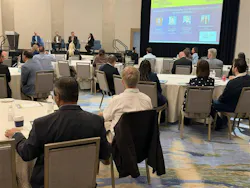

Start with the problem, not the technology
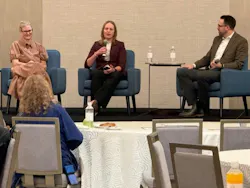
Making innovation work at the bedside
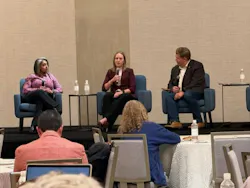
Rethinking where and how care is delivered
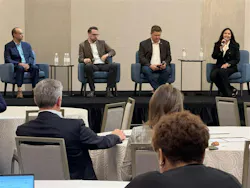
Agentic AI moves the conversation forward
AI needs guardrails — and a plan for when things go wrong
When technology fails, patient care still has to continue
Measuring the value of innovation
Keeping the human experience in view
About the Author

Melinda Taschetta-Millane
Market Content Director








 English (US) ·