
.jpg)
PROTECT YOUR DNA WITH QUANTUM TECHNOLOGY
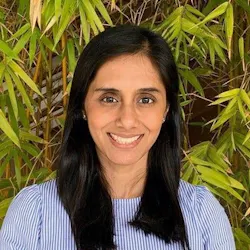
Orgo-Life the new way to the future Advertising by AdpathwayNavigating the shift from volume to value in healthcare At the July 27 CMS Health Technology Ecosystem Event, HealthEx announced its partnership with Sharecare and introduced HealthEx Wallet ID 79909942 © Dwnld777 | Dreamstime.com At Monday’s Centers for Medicare & Medicaid Services (CMS) Health Technology Ecosystem Event, HealthEx, a California-based provider of a unified health records platform, introduced HealthEx Wallet, a single, secure web app that enables individuals to access, understand, and control their health records. The company also announced its partnership with Sharecare to bring people’s clinical context into AskMD, an AI-powered health navigation and decision-support platform. In line with CMS’s Kill the Clipboard initiative, HealthEx Wallet aggregates a person’s comprehensive health history from across their places of care into a single longitudinal record they can own and connect to a broad ecosystem of health, wellness, and AI applications. Both Sharecare and HealthEx are among the organizations that have pledged to collaborate with CMS to support a voluntary, standards-based ecosystem of private-sector technology partners that integrate with the CMS Aligned Network. Priyanka Agarwal, M.D., co-founder and CEO of HealthEx Healthcare Innovation spoke with Priyanka Agarwal, M.D., co-founder and CEO of HealthEx, to discuss the recent announcements in more detail. As a physician and internist with 15 years of practice at UCSF, Agarwal has seen firsthand the challenges that both patients and caregivers face in accessing records. “I thought there's an opportunity to really put the individual and the patient at the center of this and hopefully allow individuals to get the care they need, but also to make data flow in a way that's more transparent, consented, and so forth.” HealthEx was created as a service that helps individuals access and share their health records at the moments that matter in their care journey, she explains. “We are in this world where people are used to taking control, and so we want to really ensure that a lot of that control starts with access to information.” Additionally, “We have a very robust consent, permissions, and transparency layer because we understand that health data is sensitive,” Agarwal underscores. The healthcare system is moving from institutionally centered to consumer-centered, Agarwal says. “Everything we do is grounded in an individual's digital identity. I want to be the same Priyanka, whether I'm going to UCSF, Stanford, CVS, or Walgreens. From there, we let individuals access and share their health records in a single flow across all their places of care.” Speaking from experience, Agarwal argues that despite advances in healthcare technology, poor interoperability continues to create significant barriers to care by delaying access to complete patient records, affecting both emergency treatment and timely diagnoses. A patient using HealthEx can generate a QR code of their health history and share this instantly with health institutions. “If you think about your health history and your health records, they really matter most when you can use them in a meaningful way,” Agarwal says regarding the new partnership with Sharecare. “AskMD, one of ShareCare's products, is a new place where individuals can take their health data. AskMD helps people understand symptoms and health concerns, confirm what their plan covers, and find in-network providers and community resources.” “When somebody joins AskMD,” Agarwal explains, “and then chooses to bring in their health history, HealthEx assembles their records from their places of care with their consent, so that AskMD's guidance is grounded in their whole health and their personal context instead of fragmented information.” The intent is that this will power a larger sea change in how individuals think about and manage their health HealthEx Wallet, Agarwal explains, is a web app that brings together an individual's records into a single timeline, making every visit, lab result, and diagnostic clearly visible. “It's meant to help individuals understand what's in their records in plain language.” It also shows the individual every place where they may have connected their records using HealthEx. TEFCA's Individual Access Services (IAS), the 21st Century Cures Act, and the work CMS's Health Technological Ecosystem has been doing to support patient and individual access have been hugely beneficial to HealthEx, Agarwal notes. “Historically, it hasn't been easy for individuals to assemble their health records in a comprehensive manner.” Looking ahead, HealthEx will consider further developments, including wearable data, imaging, and the option to share data with family members. “This work that we're doing, we believe, is so foundational to this notion of individuals really being able to take control of their health,” Agrawal says in closing. On the face of it, she says, it might seem that this is centered on electronic health records (EHR) and a single unified view of your entire health history. However, she continues, the intent is that this will power a larger sea change in how individuals think about and manage their health. Pietje Kobus-McAllister has an international background and experience in content management and editing. She studied journalism in the Netherlands and Communications and Creative Nonfiction in the U.S. Pietje joined Healthcare Innovation in January 2024.

About the Author

Pietje Kobus-McAllister










 English (US) ·