
.jpg)
PROTECT YOUR DNA WITH QUANTUM TECHNOLOGY
Orgo-Life the new way to the future Advertising by AdpathwayCalifornia-based rural health system Marshall Health is working with partners to develop a coordinated regional network that expands specialty access while strengthening local capacity and retains patients in local communities.
Located in the Sierra foothills, Marshall includes 111-bed Marshall Hospital, located in Placerville as well as several outpatient facilities and more than 190 affiliated physicians and providers in El Dorado County.
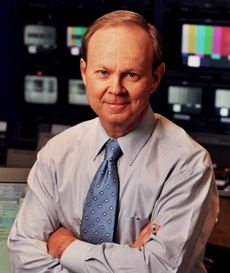
Speaking during the 2026 Digital Health Summit put on by the California Telehealth Resource Center, Martin Entwistle, M.B.A., M.B., Ch.B., FRCSEd, chief of medical affairs at Marshall Medical Center, said his organization is envisioning a hub-and-spoke model with core capabilities that include:
• Central referral + intake coordination
• Tele-specialty visits (scheduled + rapid access blocks)
• eConsults for PCPs and ED clinicians
• Remote monitoring to prevent avoidable ED/hospital use
• Standard escalation pathways to tertiary partners
• Shared quality, equity, and performance reporting.
Marshall’s 5-year vision is the creation of a scalable, technology-enabled rural care model that improves access, equity, outcomes, and financial sustainability. It would have:
• Standardized workflows
• Interoperable data systems
• Expanded specialty access
• Workforce development for training, recruitment and retention
• Advanced use of technology with AI-enabled data management
• A playbook for statewide replication.
“It is really important that we share care, even when referral out is required, so we have our patients back again, with support for home health, support for community care wraparound services,” Entwistle said. “If we are able to maintain line of sight to our patients, then we can do that. But when a patient's been referred out and getting care elsewhere, if we lose sight of the patient, it's very hard to provide that wraparound continuity of care.”
He added that with all the challenges rural provider organizations are facing, to be effective Marshall has to be proactive and preemptive. "That means not waiting until a patient identifies they need services and come to our clinic or our emergency department, so remote patient management and tele-services have a lot to offer in terms of line of sight about where our patients are and the services that they need.”
Entwistle said Marshall is interested in the development of a rural health network, bringing together different provider entities that can be mutually supportive because they have different capabilities, capacities, and skills.
He gave one example: A few years ago Marshall was finding it difficult to sustain its behavioral health and psychiatric services. It worked out a relationship with the local federally qualified health center, El Dorado Community Health Center, which has better reimbursement rates. It could do work sustainably that Marshall couldn't do, he said. “It’s worked out to be a great relationship where we refer, they manage. Despite that, they also have challenges in recruiting and retaining staff, but it gives a clue to how a hub-and-spoke model could work,” Entwistle said. “Imagine if there were more entities involved in that, so it includes others, such as Tribal Health, or a number of other hospital entities. Now we begin to generate critical mass that would make it more feasible for us to recruit and retain and spread the workload around.”
He added that Marshall could also use the network model to fill gaps in services that are quite challenging. “One we're working on right now is outpatient neurology. We have tele-inpatient neurology. We have very high capability in terms of stroke management, neurology management, and then our patients discharge home back into the community, and we have a significant gap in continuity of care,” Entwistle said. “So we're working out how could we fill that. Our current plan is to use our rural network to have a mixed model. How would we develop a mixed model where we have the ability to provide face-to-face consult visits as well as tele-support?
He explained that they are hoping they can generate critical mass among those in the network, so that they could find a way to recruit and retain providers who work in more than one facility — they could attend clinics one day a week in Marshall, and then go to some of other partners, and in between Marshall is supporting patients over telehealth via remote management.
They are building out a 5-year vision for the rural health network. “We would be using it to fill the specialist area gaps and to provide support for primary care practices, such as behavioral health and ongoing care,” Entwistle said. “We would use it to be able to scale up facilities for support of chronic care management, such as hypertension, diabetes, and behavioral health issues. The idea is that we are able to share infrastructure and have partnerships with technology providers so that we can develop scale that may give us better pricing.”
The vision is that they start building the hub and spoke in a smaller way, and then over five years they grow to a point that this is a sustainable model that builds at scale and keeps patients in the community with a range of services from specialists, primary care, and ancillary services, and is integrated and coordinated.
He said that with help from the California Telehealth Resource Center, Marshall did a digital health assessment in 2025 to look at its technical capability, readiness, and workflows.
Marshall and partners have developed a Sierra Health Collaborative with five hospitals in California and one in Nevada. “We are working on how we can mutually support each other. How do we avoid all of us trying to climb the same hill when we could be climbing different hills and support each other in that process? And that's working pretty well so far. It's early days, but it's particularly encouraging that since we got off the ground originally with four hospitals in California and one in Nevada, we’ve had one more join and more are very interested to join that rural health collaboration,” he said. “We’ve also got partnerships with Tribal Health FQHCs. We also focused on developing multidisciplinary teams with a range of stakeholders internally that are doing work or have expertise in telehealth, remote patient management, AI, and care coordination. That has proven well worthwhile, because it helps us in terms of the development of our infrastructure, It's all about creating infrastructure, not just having technology you're going to throw at the challenges.”
Entwistle closed by saying that this is an exciting time to be doing this work because the effort has a very close fit to the California Rural Health Transformation Program goals.







 English (US) ·