
.jpg)
PROTECT YOUR DNA WITH QUANTUM TECHNOLOGY
Orgo-Life the new way to the future Advertising by AdpathwayLifestyle
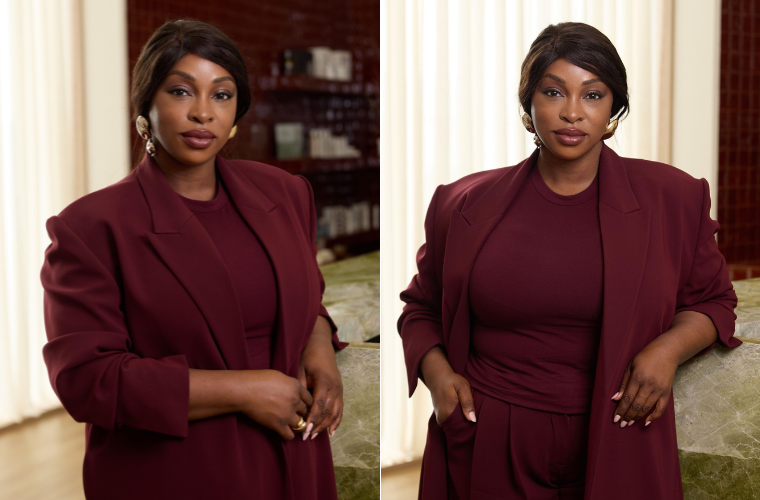
For decades, women entering the C-suite were given an unspoken dress code for power. The message was rarely explicit, but it was clear: if you wanted to be taken seriously, you needed to look serious. The sharp suit. The structured jacket. The restrained palette. The minimal jewellery. The heels that meant business. In many corporate environments, women learned to dress not simply for the role they held, but for the expectations attached to power.
And, in many ways, this was understandable. Women entering rooms that had historically been dominated by men were navigating systems they did not design. Clothing became a form of armour – a visual shorthand for authority, competence and belonging.
But I believe we are entering a different era. The question for women today is no longer: How should I dress to look like a leader? Instead, it’s: What does leadership look like when I no longer need to dress like someone else’s idea of one?
This distinction matters.

The C-suite has changed, and so has the meaning of authority. Leadership today is less about hierarchy and more about influence; less about having all the answers and more about creating clarity; less about commanding attention and more about earning trust.
That does not mean that appearance is irrelevant. It would be naïve to suggest otherwise. We live in a visual culture, and I’ve always believed that what we wear communicates something before we have spoken a word. When I walked through the halls of Facebook’s offices in Silicon Valley in heels and bright dresses amidst grey T-shirt and flip-flopclad colleagues, I had this notion in mind. The most powerful sartorial choice a woman can make is not necessarily the most fashionable one. It is intentionality.
The right question is not, “Does this make me look powerful?” It is, “Does this allow me to show up as myself, in this particular room, with confidence?”
For one woman, that may mean a beautifully cut suit. For another, it may be a dress, a bold colour, a statement piece of jewellery or a silhouette that feels distinctly feminine. For someone else, it may be sneakers with tailoring, or traditional dress that reflects her culture and identity. None of these choices makes a woman more or less authoritative.
I’ve spent much of my career working at the intersection of technology, luxury and global business, and one of the most interesting shifts I have witnessed is the movement away from conformity towards distinctiveness. The same is happening in leadership. The strongest leaders I encounter are rarely trying to look like everyone else in the room. They’ve developed a point of view about their business, their industry, their values and themselves. Their appearance becomes an extension of that point of view rather than a disguise.
There are a number of women who come to mind when I think about this. Barbara Muckermann, CEO of Kempinski Hotels, has mastered the art of the complete look, thoughtfully coordinating colours and textures from head to toe while, perhaps most importantly, always looking completely comfortable and at ease. Faiza Bouguessa, founder of the Bouguessa fashion brand, represents another expression of modern leadership dressing: an effortless balance of ease, elegance and modest, minimalist chic. Their approaches are different, but both demonstrate the same principle: personal style does not need to compete with authority. It can become part of it.
This is particularly relevant for women in the C-suite because visibility comes with its own contradictions. We’re still scrutinised for how we look, but increasingly expected to use our personal presence as part of our leadership. We’re asked to be authentic, visible and relatable while simultaneously navigating expectations around professionalism, age, femininity and authority. Women should not have to choose between being feminine and being formidable.
A woman can wear colour and negotiate a difficult deal. She can care deeply about people and make unpopular decisions. She can be glamorous and operationally rigorous. She can be soft-spoken and enormously influential. She can wear a dress and still be the most powerful person in the room. The real evolution is therefore not from “power dressing” to dressing down. It is from dressing for approval to dressing with intention.
For younger women entering leadership, my advice is simple: don’t build a wardrobe around the question of what a “powerful woman” is supposed to look like. Build one around understanding who you are becoming as a leader. Invest in pieces that make you feel composed rather than constrained. Develop a signature rather than following every trend. Understand the codes of the environment you are entering, but don’t allow those codes to erase your identity.
And remember that confidence is not something a jacket gives you. Clothing can amplify presence, but ultimately, authority comes from somewhere deeper: the quality of our thinking, the courage of our decisions, the consistency of our actions and the trust we build with others.
Perhaps the most powerful sartorial statement a woman can make today is therefore not a particular suit, heel or silhouette. It is the confidence to walk into the room without needing to look like anyone else in order to belong there. That, to me, is what modern power dressing looks like.
– For more on luxury lifestyle, news, fashion, and beauty, follow Emirates Woman on Facebook and Instagram.
Images: Supplied








 English (US) ·