
.jpg)
PROTECT YOUR DNA WITH QUANTUM TECHNOLOGY
Orgo-Life the new way to the future Advertising by Adpathway
Natural remedies for chronic conditions refer to plant-based, dietary, and lifestyle approaches used alongside conventional medical treatments to manage long-term health issues like diabetes, arthritis, and hypertension. These approaches work best when integrated with your doctor’s treatment plan rather than used as replacements, with evidence strongest for dietary changes, sleep, stress management, and specific herbs like garlic for blood pressure and cinnamon for blood sugar regulation.
- Garlic and lemon are the most frequently used herbs for hypertension management, with garlic showing modest blood pressure benefits through sulfur compounds.
- Cinnamon is used by 12.7% of diabetes patients studied, though it works best as an adjunct to medications like insulin or metformin, not as a replacement.
- A structured lifestyle intervention between 1996 and 1999 showed participants had 21% lower risk of developing multiple chronic diseases.
- Natural remedies are pharmacologically active and can interact with medications, so discussing them with your healthcare provider is essential before use.
- Anti-inflammatory diets rich in omega-3s and polyphenols show measurable improvements in symptoms for conditions like rheumatoid arthritis.
Understanding Natural Remedies for Chronic Conditions
Natural remedies for chronic conditions
refer to plant-based, dietary, and lifestyle approaches used alongside or sometimes instead of conventional medical treatments to manage long-term health issues. Millions of adults managing chronic diseases like diabetes, arthritis, and hypertension are exploring these complementary approaches, not as replacements for medical care, but as integrated strategies to improve quality of life.
The stakes are significant. Noncommunicable diseases killed at least 43 million people in 2021, equivalent to 75% of non-pandemic-related deaths globally. The economic burden is staggering: the estimated worldwide cost of chronic disease is expected to reach $47 trillion by 2030 according to The Lancet Public Health’s lifestyle medicine research. Yet here’s what most wellness guides miss: the gap between belief and action. A 2026 survey found that 96% of Americans say good nutrition helps prevent chronic disease, but only 30% report eating “very healthy” themselves.
This disconnect is where natural remedies enter the conversation. They’re not magic. They’re not a substitute for your doctor’s treatment plan. But they can be a meaningful part of how you take charge of your health when used thoughtfully and with proper guidance.
Herbal Remedies for Chronic Conditions: What the Evidence Shows
Herbal medicine has a long history, but the evidence behind specific herbs is mixed. Some show promise for particular conditions; others lack rigorous testing. The key is understanding which remedies have research support and which are still speculative.
Research examining herbal use among patients with chronic diseases found patterns worth noting. Among those studied, the most frequently reported herbs included lemon (39.6%) and garlic (11.1%) for hypertension, cinnamon (12.7%) for diabetes, and walnut (6.3%) for hyperlipidemia. These weren’t random choices, patients and practitioners gravitated toward herbs with traditional use and some supporting evidence. That said, traditional use doesn’t guarantee safety or efficacy.
Commonly Used Herbs for Specific Conditions
Garlic stands out for blood pressure management. The sulfur compounds in garlic may help relax blood vessels, though the effect is typically modest compared to pharmaceutical interventions. Most research suggests consistent use over weeks to months shows benefit, not immediate results.
Cinnamon has gained attention for blood sugar regulation in diabetes management. Some studies show small improvements in fasting glucose levels, but results vary widely. It’s not a replacement for insulin or oral medications, it’s an adjunct worth discussing with your healthcare provider.
Turmeric’s active compound, curcumin, shows anti-inflammatory properties in laboratory studies. For conditions like rheumatoid arthritis, some patients report reduced joint pain and swelling, though rigorous clinical trials are limited. The challenge is absorption: curcumin is poorly absorbed in the gut, which is why many formulations add black pepper to enhance bioavailability.
Ginger has traditional use for digestive issues and inflammation. Research supports its role in managing nausea and potentially reducing inflammatory markers, making it relevant for conditions with inflammatory components. However, it can interact with blood thinners and other medications.
Research identified the most frequently used herbs for managing specific chronic conditions.
| Hypertension | Lemon | 39.6% |
| Hypertension | Garlic | 11.1% |
| Diabetes | Cinnamon | 12.7% |
| Hyperlipidemia | Walnut | 6.3% |
Natural Remedies for Chronic Pain Management
Chronic pain affects millions and drives many toward natural approaches. The reality is that herbal remedies alone rarely eliminate severe pain, but several show evidence for supporting pain management as part of a broader strategy.
Willow bark contains salicin, a compound similar to aspirin’s active ingredient. Historically used for back pain and arthritis, some modern studies support modest pain reduction.
Boswellia (frankincense resin) has been used in Ayurvedic medicine for joint conditions. Research suggests it may reduce cartilage breakdown in osteoarthritis, though effect sizes are generally small to moderate. Patients often combine it with other approaches rather than relying on it alone.
Capsaicin, derived from hot peppers, works through a different mechanism, it depletes substance P, a neurotransmitter involved in pain signaling. Topical capsaicin creams show evidence for localized pain relief in arthritis and neuropathy.
Mind-body practices amplify these effects. A structured lifestyle intervention between 1996 and 1999 showed that participants had a 21% lower risk of developing multiple chronic diseases, demonstrating that behavioral approaches have measurable impact.
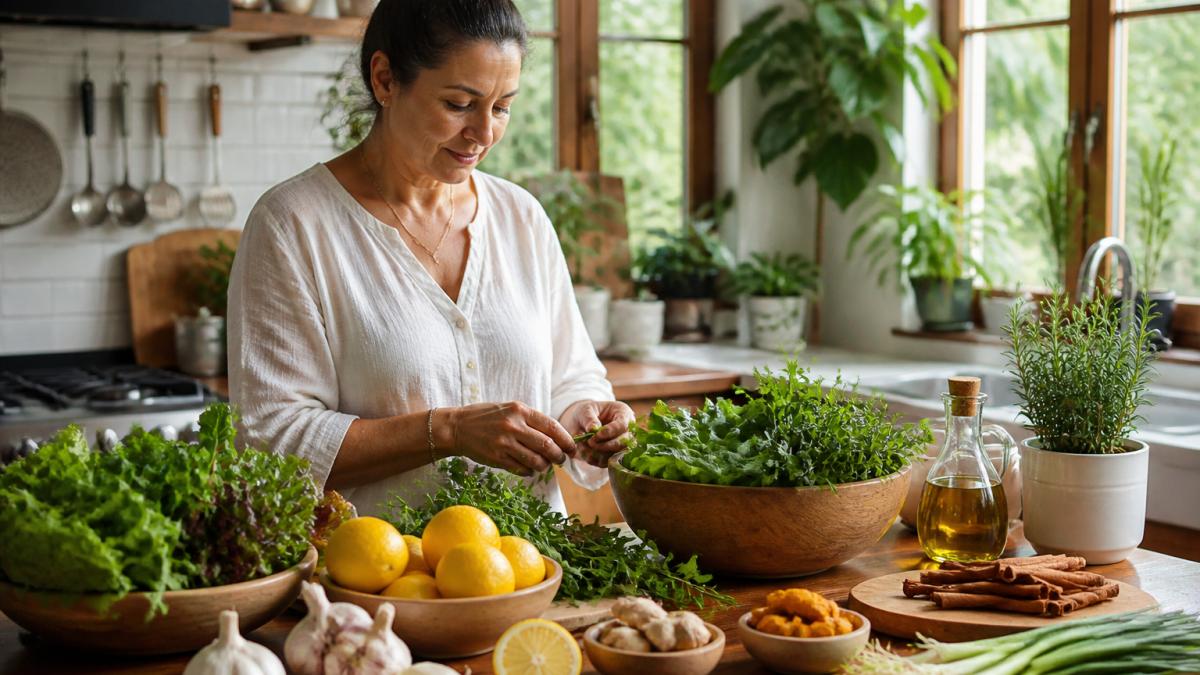 Adult preparing fresh vegetables and herbs in a bright kitchen, with whole foods like garlic, lemon, and cinnamon visible on the counter, natural sunlight streaming through windows
Diet and Lifestyle Changes for Chronic Illness
This is where the evidence becomes strongest. The CDC advises people with chronic conditions to eat well, stay active, and follow their treatment plan. That’s not alternative medicine, it’s foundational medicine. Yet many people still treat diet as secondary.
Anti-inflammatory eating patterns reduce disease progression across multiple conditions. Foods rich in omega-3 fatty acids (fatty fish, flaxseeds), polyphenols (berries, dark leafy greens), and sulfur compounds (garlic, onions, cruciferous vegetables) have documented effects on inflammatory markers. For rheumatoid arthritis, Mediterranean-style diets show measurable improvements in symptoms and disease activity.
Intermittent fasting has gained attention for metabolic conditions. Some research suggests time-restricted eating improves insulin sensitivity and supports weight management, both critical for diabetes control.
Sleep quality often gets overlooked. Chronic sleep deprivation worsens pain perception, impairs immune function, and destabilizes blood sugar. Prioritizing 7-9 hours of consistent sleep is not a natural remedy, it’s a biological requirement that amplifies the effectiveness of everything else you do.
Stress management through regular practice, whether that’s meditation, journaling, or time in nature, has measurable physiological effects. Chronic stress elevates cortisol, which drives inflammation and worsens most chronic conditions. This is where lifestyle intervention delivers its real power.
Integrative Medicine for Chronic Diseases: Combining Approaches
Integrative medicine isn’t about choosing between conventional and natural approaches. It’s about combining them strategically. Alternative Medicine’s approach emphasizes this integration: evidence-based information on natural remedies alongside conventional treatment, not as a replacement.
The strongest outcomes occur when patients use natural remedies to enhance their prescribed treatment plan, not substitute for it. A person with type 2 diabetes might use cinnamon and dietary changes to improve insulin sensitivity while continuing metformin. Someone with arthritis might combine physical therapy, anti-inflammatory diet, and carefully selected herbs with their medication regimen.
This requires honest communication with your healthcare provider. Many physicians are open to discussing complementary approaches if you present them as additions to, not alternatives to, their recommendations. What matters is transparency about what you’re taking and why.
Timing also matters. Some natural remedies work best as preventive measures, taken consistently over months. Others provide acute support during flare-ups. Understanding this distinction prevents disappointment when a remedy doesn’t deliver immediate results or when it works differently than expected.
Safety Considerations and When to Avoid Natural Remedies
Here’s what most wellness content glosses over: natural doesn’t mean safe. Herbal remedies are pharmacologically active compounds. They interact with medications, can cause side effects, and aren’t appropriate for everyone.
MedlinePlus cautions that herbal remedies are not regulated or tested like medicines. Mayo Clinic notes that vitamins and natural supplements can be harmful at the wrong dose or when combined with certain medicines. Ginkgo biloba, for example, thins blood and shouldn’t be combined with anticoagulants. St. John’s Wort reduces the effectiveness of birth control and many psychiatric medications.
Certain populations should avoid most herbal remedies entirely: pregnant women, nursing mothers, young children, and people with liver or kidney disease. If you have severe chronic conditions or take multiple medications, the interaction risk increases substantially.
Watch out: self-diagnosing and self-treating with natural remedies can delay necessary medical intervention. If you have new symptoms, worsening pain, or signs of disease progression, these require medical evaluation, not an herbal experiment. Natural remedies work best for stable, well-managed conditions, not acute crises.
Contamination is another real concern. Some herbal supplements contain heavy metals, pesticides, or unlisted ingredients. Purchasing from reputable suppliers and looking for third-party testing seals (USP, NSF, ConsumerLab) reduces but doesn’t eliminate this risk.
Discussing Natural Remedies With Your Healthcare Provider
This conversation matters more than the remedies themselves. Your doctor needs to know what you’re taking because it affects your treatment plan. They may adjust medication doses, monitor you more closely, or recommend against certain herbs based on your specific situation.
Start with transparency. Tell your provider you’re interested in complementary approaches and ask which ones they’d support.
Bring specific information. Don’t say “I’m thinking about taking some supplements.” Say “I’m considering cinnamon supplementation for my blood sugar management. I’ve read that it may improve fasting glucose. What’s your perspective?” This specificity opens dialogue rather than triggering dismissal.
Document everything you take: the name, dose, frequency, and brand. This creates a record for your medical team and helps identify potential interactions if you see multiple providers. Some practices now ask patients to bring in bottles of supplements at appointments.
Recognize that your doctor’s caution isn’t close-mindedness. It’s responsibility. They’re accountable for your safety in ways that wellness influencers aren’t. Their job is to ensure that anything you add to your regimen doesn’t undermine your core treatment plan or create new problems.









 English (US) ·